Rebuilding Abdominal Strength and Contour After Significant Changes

< Blog < Rebuilding Abdominal Strength and Contour After Significant Changes
There is a point at which the midsection stops being a training problem and starts being an anatomical one. The skin hangs in a fold you can lift with two hands. The waistband sits under a pad that never belonged to the muscle. Crunches make the bulge more obvious, not less, because the two sides of the abdominal wall have parted and the exercise is pushing the bowel forward through the gap.
That picture is common after pregnancy and after a large weight change. Diet does not shorten skin. A plank does not stitch rectus muscles back together. This is why people searching for a tummy tuck Southampton or a tummy tuck Portsmouth are usually asking about strength and contour together, not about “a flatter stomach” as a slogan.
If that is familiar and you live in or around Southampton, Portsmouth, Winchester or the wider South Coast, this is a practical look at what abdominoplasty is actually for, how tummy tuck recovery unfolds, and where a standard tuck stops and wider body contouring after weight loss begins.
What changed, and why the gym cannot reverse it
Two things happen to the abdomen after a significant change, and they are easy to confuse.
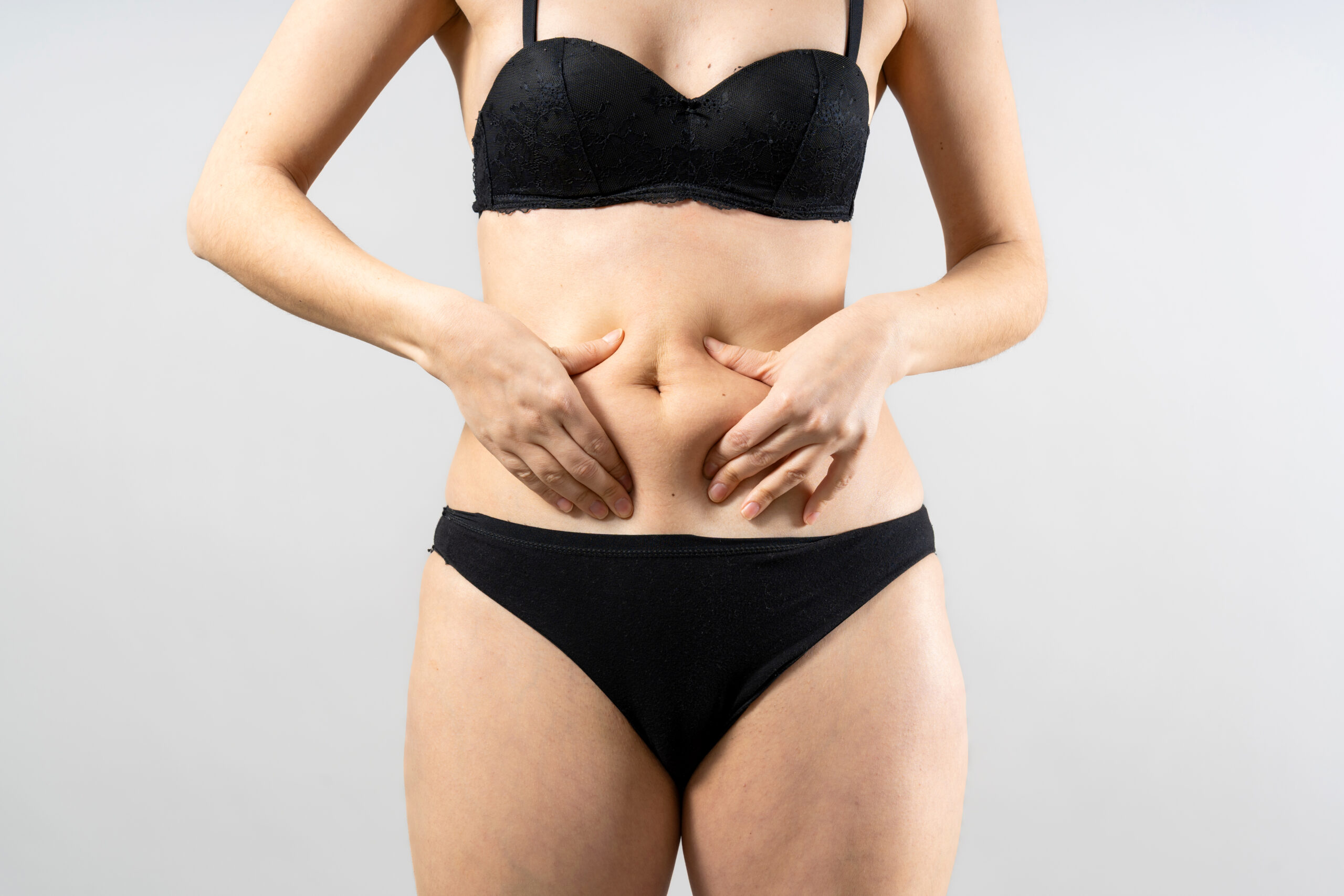
The envelope. Skin that stretched to cover a pregnancy or a higher weight does not reliably snap back. You are left with an apron, a crease that stays damp, or a fold that shows through every fitted top. Non-surgical tightening can take a little slack. It does not remove a sheet of skin. The clinic’s note on loose skin after weight loss is honest about that limit.
The wall. The paired rectus muscles can separate down the midline, diastasis. The core still fires, but the front of the abdomen is no longer a single, tensioned sheet. People describe a cone when they sit up, a softness that feels structural rather than fatty, and a posture that leans on the lower back because the front is not sharing the load.
Fat on top of that can be suctioned. Fat is not the main complaint for most people who need a tuck. The complaint is skin that will not sit and a wall that will not hold.
Daily workarounds tend to cluster:
- High-waisted shapes worn as scaffolding rather than a style choice
- Avoiding anything that clings, or anything that rides up and shows the fold
- Skin irritation in the crease, especially in warm weather
- A standing posture that tucks the pelvis to hide the lower abdomen
- Core work abandoned because it makes the midline bulge more visible
- After weight loss, clothes that fit the new frame everywhere except the midsection
What a tummy tuck actually rebuilds
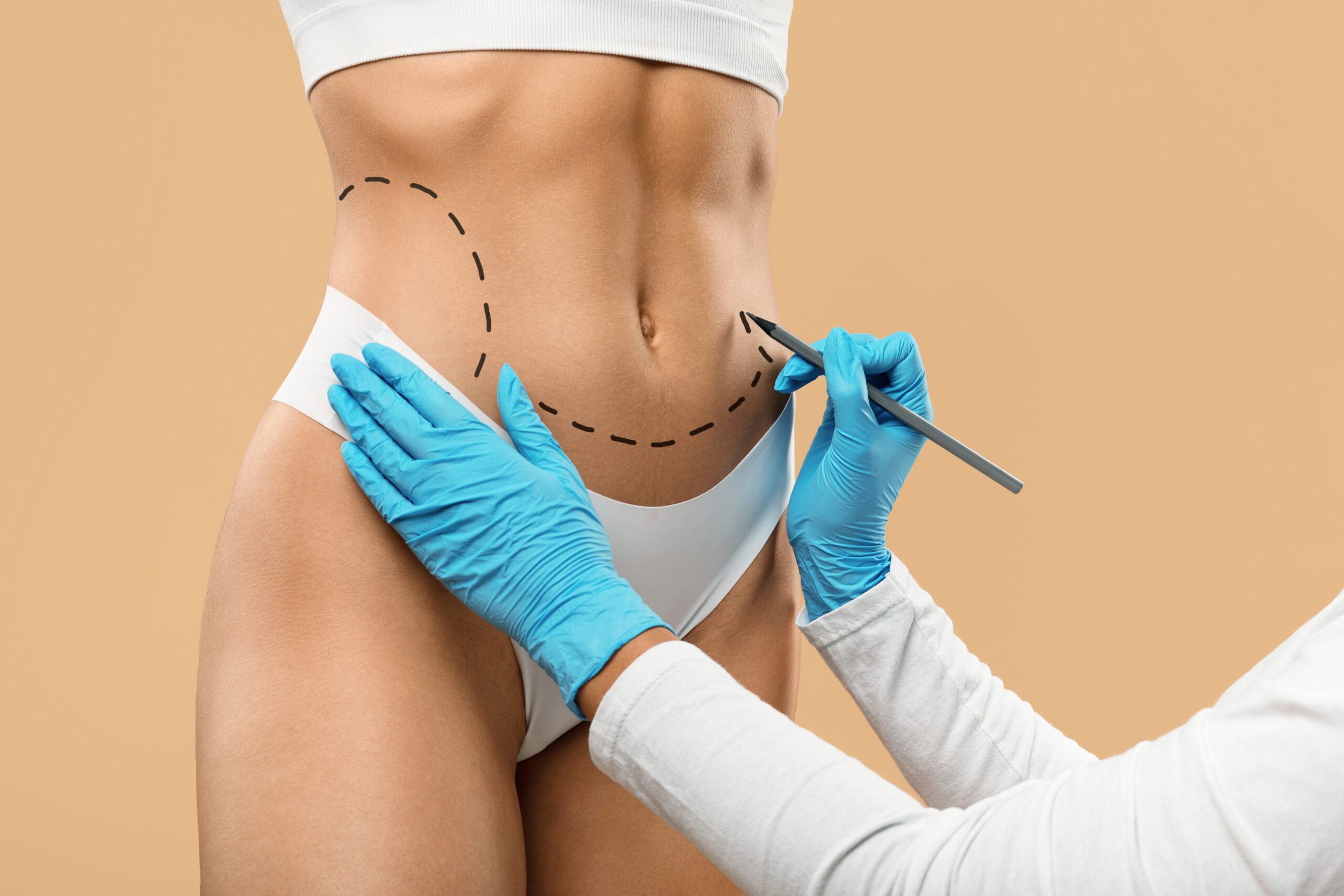
A tummy tuck (abdominoplasty) is not a larger liposuction. Excess skin is cut away. Remaining tissue is redraped. Where the muscles have parted, they are brought back to the midline and held. The navel is usually resited so it sits on the new abdominal surface rather than being dragged down with the old skin. Liposuction can be added at the flanks so the waist matches the flatter front. That combination is a different plan and a different fee.
At Adnova Clinic, a specialist day-surgery centre near Southampton, the procedure is typically:
- Performed under general anaesthetic
- Around ninety minutes to three hours, depending on how much skin is taken and whether liposuction or VASER is added
- Day-case for suitable patients, so you go home the same day
- Planned without drains, with dissolvable sutures
The incision is usually low, hip to hip, where a standard brief will cover it. A mini tuck treats a limited lower-abdominal fold and does not always move the navel. A standard tuck addresses the skin from the ribs down and repairs the wall. After major weight loss the extra skin may run up the midline as well as across, which is when a fleur-de-lis pattern is the honest design, a vertical limb as well as the low scar. If the excess wraps around the back, the conversation shifts toward a body lift rather than a tuck that stops at the flanks.
If the only problem is a fat pad and the skin still has recoil, you do not need this operation. That is liposuction or VASER, and the clinic’s comparison of abdominoplasty versus liposuction exists so that distinction is made before anyone is quoted.
Body contouring after weight loss is not always a tummy tuck
People use “tummy tuck” as a shorthand for everything that hangs after the weight has gone. The anatomy is rarely that tidy.
A stable weight is the starting rule. Operating while the number is still falling wastes skin you may need later and changes the plan mid-recovery. Once weight has settled, the question is where the excess actually sits. Abdomen only: a tuck, sometimes with flank liposuction. Abdomen plus a vertical fold of leftover skin: fleur-de-lis. Abdomen plus back and hips: a circumferential lift. Arms or thighs that now have their own aprons: those are separate operations, not extras squeezed into the same incision.
That is body contouring after weight loss as a sequence, not a single theatre list. Combining breast surgery with a tuck and liposuction — the plan often called a mummy makeover, is a further conversation about time under anaesthetic and recovery load. The clinic’s piece on combining breast surgery, tummy tuck and liposuction sets out when that grouping is reasonable and when it is too much in one day.
Tummy tuck recovery: what the weeks actually feel like
Tummy tuck recovery is longer than liposuction recovery because skin has been cut and the muscle wall has been repaired. Tightness is the dominant early sensation, not sharp pain for many people. Walking hunched for the first days is normal; the repair is being protected.
Days 0-3. Home the same day if you are a suitable day-case patient. Surgical garment on. Sleep slightly elevated. Short walks around the house. Someone needs to be with you after a general anaesthetic. Bending at the hips is easier than standing bolt upright.
Week 1-2. Swelling and bruising are at their most obvious. Desk work is often possible in this window if the job does not involve lifting. Driving waits until you can use the belts and the pedals without guarding the abdomen. The low scar is taped; and should be left to heal.
Weeks 3-6. You stand straighter. Swelling starts to drop. Light activity may be allowed; anything that loads the core or the repair is not. Compression stays on as instructed, commonly day and night for around six weeks unless your surgeon says otherwise.
Week 6 onwards. Exercise is usually cleared in stages. Final shape is not the six-week photograph. Swelling keeps falling for months. Scars mature over a year or more. Sensation along the abdomen can be numb or odd well into that period.
What helps more than any product: wear the garment, keep the weight stable, do not smoke, walk rather than lie still, and attend the reviews. All abdominal packages include a microneedling session for the scar once the wound has settled. That is aftercare, not a promise the line will vanish.
Plastic surgery before and after UK, how to read the pictures
Searches for plastic surgery before and after in the UK are how most people try to predict their own result. The photographs are useful. They are also easy to misuse.
A picture is taken in similar light, similar stance, similar underwear, at a comparable time after surgery. An early post-operative image still includes swelling and a garment. A twelve-month image is closer to the settled scar and the settled contour. Lighting that slims a waist, a raised chin, or a sucked-in “before” is not accurate.
What the pictures cannot show is the repair you cannot see, the muscle wall holding when you stand and sit. Strength is why people say they stand differently after a tuck, not only because a fold has gone. What they also cannot show is your skin quality, your scar tendency, or how you will heal. Looking at someone else’s abdomen is the start of a consultation, not a contract for the same outline.
Adnova’s own abdominoplasty page carries before-and-after images for that reason. Use them to understand the scar pattern and the kind of change the operation produces. Do not use them as a catalogue size.
What it costs at Adnova
Guide figures from the current body treatment price list, are: mini abdominoplasty £4,750; standard abdominoplasty £8,750; lipoabdominoplasty £9,850; VASER lipoabdominoplasty £12,000; FDL abdominoplasty £12,000. Circumferential body lift is listed separately at £12,650, and higher when a fleur-de-lis pattern is added. Always check the live page; figures can change per surgeon and plan.
Standard and combination packages typically include two garments and one microneedling scar treatment when you pay by BACS. The mini package lists one garment. Consultation is separate. Finance is available through Ideal4Finance subject to status. The written quotation after examination is the real number; the list is a starting point.
What changes the fee is the pattern of the scar, whether muscle repair and liposuction are part of the same sitting, and whether the excess is abdominal only or circumferential. You are not usually quoted a tuck plus a second full fee for the lift element of the same operation.
Southampton, Portsmouth and the drive
Adnova Clinic is based near Southampton, in a dedicated day-surgery centre in Fareham rather than a ward in a large hospital. That is why searches for tummy tuck Southampton and tummy tuck Portsmouth tend to reach the same list: consultation, theatre and follow-up on one site, same-day discharge for suitable patients, parking on the day.
Portsmouth is a short drive along the M27. Winchester is straightforward on the M3. People travelling from further across Hampshire or from Guildford do so because they want a consultant-led plan in a CQC-registered facility that performs this work regularly, including the variants that follow major weight loss.
Who is usually a candidate, and who should wait
A good candidate is in reasonable general health, at a weight that has stopped changing, and clear that the problem is skin and wall rather than a diet that has not been tried. Future pregnancy will restretch the repair and the skin; if another baby is planned soon, timing the operation after that pregnancy is usually kinder to the result. Smoking is a problem for a long abdominal scar. Uncontrolled medical conditions need to be settled first.
NHS funding for abdominal contouring after weight loss exists in some areas when strict criteria are met, typically around functional problems from an apron of skin. Many people still choose private care because local thresholds or waiting times do not match the life they are trying to get back.
What the process looks like at Adnova
1. Consultation. Standing examination of skin, fold, muscle separation and neighbouring areas. Book a consultation to go through mini versus standard versus fleur-de-lis honestly. The clinics questions to ask during a surgical consultation are a useful prompt.
2. Planning. Photographs, marking logic, and a written quotation based on the body fees list.
3. Surgery. Day-case, general anaesthetic, no routine drains, dissolvable sutures.
4. Early recovery. Garment, limited lifting, walking rather than complete rest. Desk work is often possible in one to two weeks.
5. Later recovery. Swelling falls over weeks to months. Scars mature over 12 months or more. Core work waits for clearance.
Complications are uncommon but not fictional: bleeding, infection, seroma, delayed healing along the scar (more likely at points of tension), asymmetry, numbness, and, rarely, problems with the navel or the skin flap. Read the clinic terms before you book.
A note on expectation
Surgery can put the abdominal wall back under tension and take away the skin that diet could not. It cannot give you a midline with no scar, a core that never needs retraining, or a result that survives another large weight change or another pregnancy unchanged. The useful test is functional: can you stand, dress and load the trunk without the abdomen being the first problem in the room?
If you are looking for a tummy tuck in Southampton, a tummy tuck in Portsmouth, or a wider plan for body contouring after weight loss, the next step is a consultation that looks at the skin, the muscle and the change you have already made.
Book a consultation or call 01489 539484.
This article is general information, not a personal medical recommendation. Suitability, technique and recovery are confirmed only after consultation. Guide prices are taken from Adnova’s published body list and may change.
Disclaimer: The prices listed in this article are for general guidance only and may be subject to change. For the most up-to-date and accurate pricing, please visit our face pricelist, body pricelist and breast pricelist.