Rhinoplasty for Crooked Noses: Fixing a Deviated Septum with Style

< Blog < Rhinoplasty for Crooked Noses: Fixing a Deviated Septum with Style
A crooked or misaligned nose can affect more than just your appearance. For many people it impacts breathing, sleep quality, and confidence. This guide explores how rhinoplasty, particularly when combined with septoplasty (to correct a deviated septum), can restore both form and function. While this content has a UK focus, the principles apply widely.
The problem: What causes a crooked nose?
A crooked nose, or one that appears off-centre, angled, or asymmetrical, can arise for a number of reasons:
- Trauma or injury: A past fracture or impact to the nasal bones can cause healing in a deviated or tilted alignment.
- Congenital or developmental asymmetry: Some people naturally have a deviated nasal septum or uneven bone/cartilage growth.
- Deviated septum: The internal wall (septa) between the nostrils can be off-centre, bent or twisted; this often goes hand-in-hand with external crookedness.
- Previous nasal surgery gone awry: Revision rhinoplasty is often required when prior surgery has left asymmetry or functional problems.
Because the nose sits in the centre of the face, even a small deviation can draw attention and impact how the face is perceived. For many, the concern isn’t just cosmetic: blocked breathing, nasal congestion, sleep issues or even recurrent sinus problems may accompany the crooked appearance.
What a combined rhinoplasty + septoplasty can achieve (Septorhinoplasty)
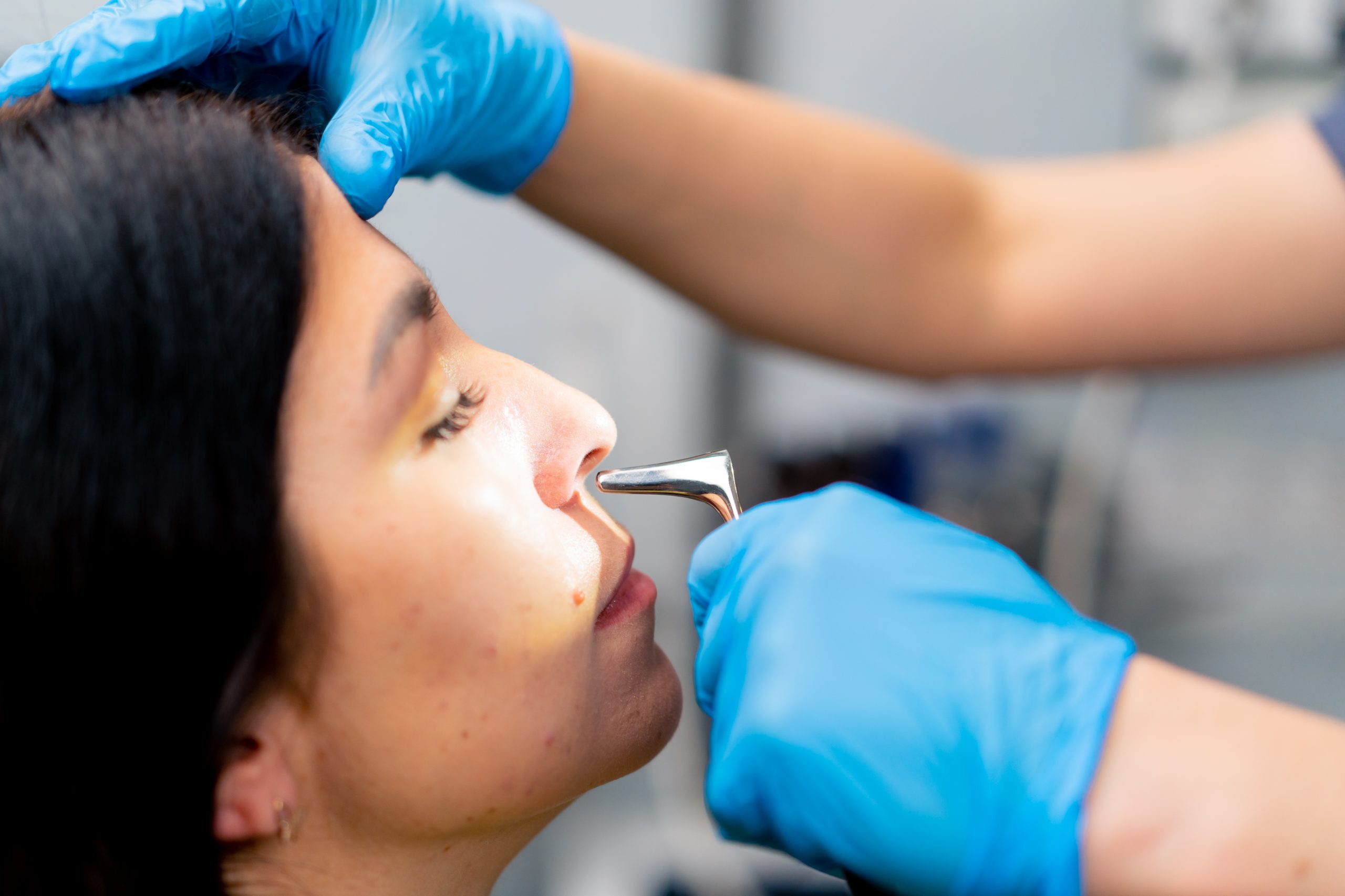
When the objective is to straighten the nose and restore or improve breathing, the procedure is often termed septorhinoplasty, the combination of correcting the septum and reshaping the external nose. It differs from Rhinoplasty, in the fact that its main focus is on function (breathing) as opposed to cosmetic. There is normally a small associated ‘cosmetic’ change in the outside shape of the nose, normally a straightening.
Here’s what the procedure typically involves and what it can achieve:
Functional benefits
- Straightening the septum opens both nasal airways more evenly, reducing nasal obstruction, congestion, and sleep-related breathing problems.
- Correcting internal valve collapse or asymmetry of the nasal sidewalls often occurs alongside external realignment.
Cosmetic benefits
- Repositioning nasal bones (via osteotomies) and restructuring cartilage can bring the nasal axis closer to the facial mid-line, improving symmetry.
- Tip refinement, bridge straightening, nostril base adjustment, all may be incorporated to create a nose that harmonises with the rest of the face.
- Importantly: the aim is not perfection (completely symmetrical is rarely realistic), but significant improvement in alignment, shape and function.
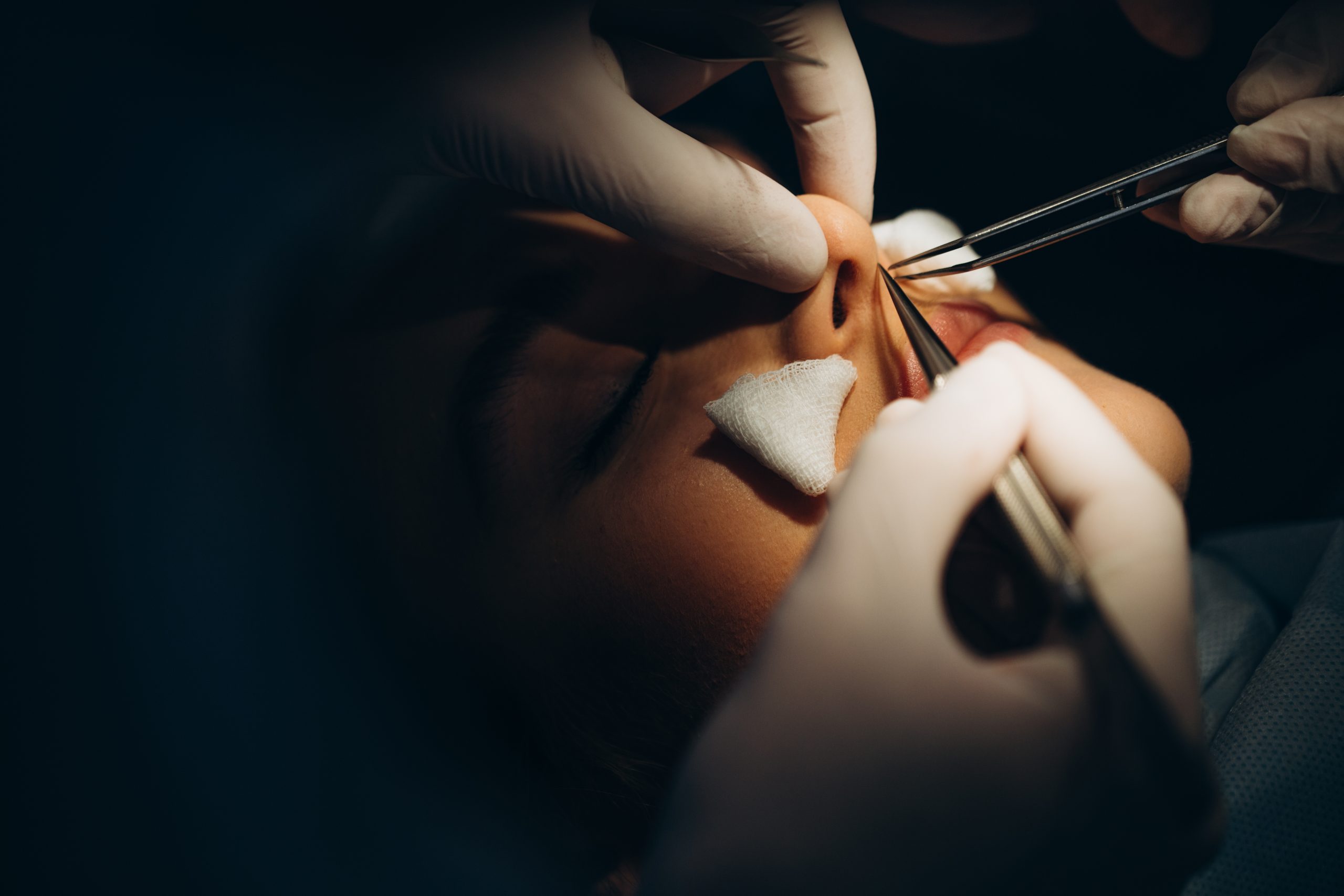
How the procedure works: key surgical steps
Every surgeon will tailor the approach to your anatomy, but common elements include:
1. Pre-operative assessment
- Internal examination of the septum, nasal valves and sidewalls.
- External assessment of bone and cartilage deviation (which side the bony pyramid leans, length discrepancies of sidewalls).
- Facial symmetry assessment, because if underlying skeletal asymmetry (cheekbones, maxilla) exists, full “straightness” may be limited.
2. Surgical access: open vs closed approach
- In more complex cases (significant crookedness, multiple deviations), many surgeons favour the open approach to give better visualisation and access.
- Milder cases may be handled via closed (endonasal) techniques with no external incision, but access is more limited.

3. Correcting bony and cartilaginous structure
- Osteotomies: controlled breaks in the nasal bones to reposition the nasal pyramid centrally.
- Septal surgery (septoplasty): removal or repositioning of deviated septal cartilage/bone, often with reinsertion or grafting to stabilise the structure.
- Cartilage grafts/spreader grafts: used to stabilise the middle vault, widen internal nasal valve or support asymmetrical cartilage.
4. Soft-tissue management
- Addressing differences in nasal skin/tissue envelope caused by chronic deviation may require careful redraping or ligament release.
- Ensuring both sides settle well and don’t produce a recurrent deviation due to soft-tissue recoil.

5. Post-operative support
- A splint is typically worn for the first week or so; internal packs or dressings may also be used to support the newly aligned septum and nasal skeleton.
- Follow-up visits at defined intervals to monitor healing, swelling, airway function and symmetry.
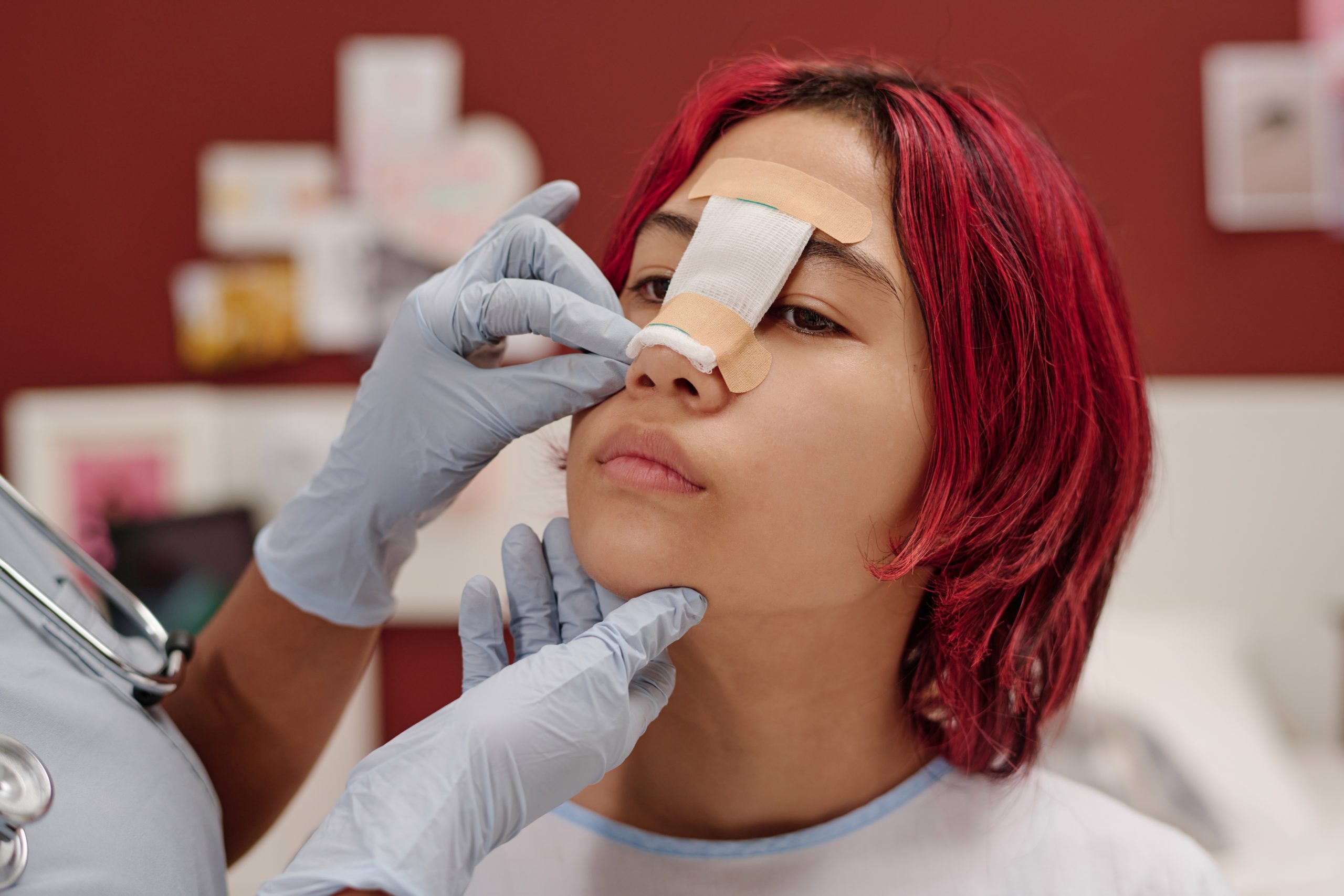
Recovery and what to expect
- Immediately post-surgery you should expect swelling, bruising around the nose/eyes, some nasal stiffness and occasional bleeding or crusting.
- Most clinics advise a splint for ~7–10 days; minimal activity first week; avoid strenuous exercise for ~3–4 weeks.
- Breathing improvements are often noticeable once swelling begins to reduce, though full internal healing may take months.
- The external appearance will continue to refine over 6–12 months; tip swelling can linger longest. Some degree of residual asymmetry is common and not necessarily a failure.
- It is important to have realistic expectations, especially if underlying facial asymmetry limits total straightness.
Choosing a surgeon and setting realistic goals
For a successful outcome, these factors are particularly relevant:
- Ensure the surgeon is appropriately qualified (in the UK context: registered with the General Medical Council, listed on the specialist register, and has experience in both functional and aesthetic rhinoplasty – ideally fellowship trained and certified to undertake cosmetic nasal surgery through the royal college of surgeons).
- Review before/after photographs of patients with similar nasal deviation to your own.
- Ask about functional aspects of the surgery (airway improvement, septal correction) – not just cosmetics.
- Discuss your goals vs anatomical limitations openly:
- If your face has asymmetry (cheekbones, maxilla, orbital positions), your surgeon should explain how this affects achievable symmetry.
- Recognise that “perfectly straight” is rare. One paper notes that for deviated noses, “a straighter nose is possible on an asymmetric face” but perfect bilateral symmetry is unrealistic.
- Clarify cost, follow-up, potential for revision surgery (which tends to be more complex). For UK context pricing: e.g. £8,500-13,000 depending upon complexity.

When is NHS funding an option (UK context)
Because rhinoplasty is often viewed as cosmetic, NHS funding is limited. Within the Hampshire and IOW ICB septoplasty, septorhinoplasty or rhinoplasty is now not routinely funded on the NHS. The only realistic option for surgery in the majority of patients is privately funded care. Do check with your local health board and nhs funding for these type of, limited clinical benefit procedures, are becoming more and more restricted.
Key questions to discuss with your surgeon
- What is the cause of your nasal deviation (bone, cartilage, septum, soft tissue)?
- Will both functional (breathing) and aesthetic (appearance) issues be addressed?
- Which surgical approach will you use (open or closed) and why?
- What is the expected timeline for recovery (including return to work, sport)?
- What does the healing process look like (swelling, anticipated final shape)?
- Are grafts required, and if so, where are they sourced (septum, ear, rib)?
- What are the risks specific to crooked-nose correction (e.g., residual asymmetry, septal perforation, valve collapse, revisions)?
- Can you view pre-/post-operative images of similar cases?
- What happens if you have future trauma, does this impact your result?

Final thoughts
Correcting a crooked nose with a deviated septum involves both functional and aesthetic considerations. A well-planned septorhinoplasty can address breathing problems, reduce congestion or snoring, and improve the nose’s appearance in one combined procedure.
However, the best outcomes come with realistic expectations, a surgeon who understands both structure and aesthetics of the nose, and a patient who is committed to the recovery process.
If you’re considering this for yourself: take the time to do your research, book a detailed consultation, and ensure you are comfortable with both the functional and cosmetic goals. Done well, straightening your nose can feel transformative, not just in how you look, but how you breathe, sleep and feel every day.
Disclaimer: The prices listed in this article are for general guidance only and may be subject to change. For the most up-to-date and accurate pricing, please visit our face pricelist, body pricelist and breast pricelist.